Description
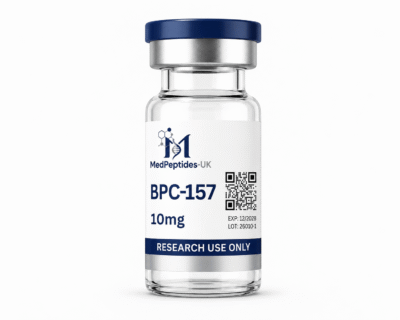
BPC-157 10mg | Synthetic Research Peptide
IMPORTANT: RESEARCH USE ONLY
BPC-157 is supplied as a lyophilized peptide powder intended exclusively for scientific and laboratory research purposes (Research Use Only, RUO).
This material is not intended for human or veterinary use, human consumption, diagnostic procedures, or therapeutic applications.
Also Known As: BPC-157, BPC 157, Body Protection Compound 157, Gastric Peptide Fragment, Pentadecapeptide BPC-157
PRODUCT OVERVIEW
BPC-157 is a synthetic pentadecapeptide consisting of 15 amino acids with the sequence GEPPPGKPADDAGLV.
BPC-157 has become a compound of scientific interest in experimental research investigating peptide signalling, cellular responses, tissue-associated biological pathways, angiogenic signalling, gastrointestinal research, and mechanisms involved in cellular and vascular regulation.
Experimental studies have examined BPC-157 across a variety of laboratory models, including research involving cell migration, vascular signalling, nitric oxide-associated pathways, angiogenesis, cellular stress responses, and tissue-remodelling processes.
The biological mechanisms associated with BPC-157 remain an active area of scientific investigation, and findings may vary substantially according to the experimental model and research conditions.
Each vial contains 10mg of BPC-157 in lyophilized form.
RESEARCH BACKGROUND
BPC-157 is a 15-amino-acid peptide that has been investigated primarily through experimental and preclinical research.
Scientific interest in BPC-157 has included investigations into its interactions with biological processes associated with cellular signalling, vascular responses, angiogenesis, gastrointestinal tissues, cellular migration, and tissue-remodelling pathways.
Research models have also examined BPC-157 in connection with signalling systems involved in vascular function and nitric oxide regulation, as well as cellular responses occurring under experimentally induced stress or tissue disruption.
These characteristics have made BPC-157 a compound of interest in laboratory research involving peptide biology, molecular signalling, vascular biology, cellular responses, and experimental tissue models.
Research into BPC-157 remains ongoing, and observations from experimental models should not be interpreted as establishing clinical efficacy or approved therapeutic use.
MECHANISM OF RESEARCH INTEREST
Scientific research has investigated BPC-157 in relation to several biological signalling processes rather than establishing a single definitive mechanism of action.
Experimental studies have explored BPC-157 in connection with angiogenic signalling, vascular responses, nitric oxide-associated mechanisms, cellular migration, and pathways involved in tissue remodelling.
Research has also examined interactions involving signalling networks that participate in cellular survival, vascular regulation, and responses to experimentally induced cellular or tissue stress.
The precise biological mechanisms associated with BPC-157 have not been fully established and remain an active area of scientific investigation.
Experimental findings may differ depending on the biological model, methodology, concentration, experimental conditions, and endpoints being investigated.
RESEARCH APPLICATIONS
- Peptide signalling research
- Cellular signalling studies
- Experimental angiogenesis research
- Vascular biology investigations
- Nitric oxide-associated pathway research
- Cellular migration studies
- Tissue-remodelling pathway research
- Gastrointestinal research models
- Cellular stress-response investigations
- Molecular signalling research
- Experimental tissue-response studies
- Peptide biology research
- Cell and molecular biology investigations
PRODUCT SPECIFICATIONS
Product Name: BPC-157
Full Name: Body Protection Compound 157
Active Ingredient: BPC-157
CAS Number: 137525-51-0
PubChem CID: 9941957
Peptide Sequence: GEPPPGKPADDAGLV
Peptide Length: 15 amino acids
Molecular Formula: C62H98N16O22
Molecular Weight: Approximately 1419.5 g/mol
Appearance: White to off-white lyophilized powder
Physical Form: Lyophilized Powder
Quantity: 10mg per vial
Product Classification: Research Use Only (RUO)
Packaging: Sealed research vial
STORAGE & HANDLING
Long-Term Storage: Store at -20°C in the original sealed container for optimal long-term storage.
Short-Term Storage: Store refrigerated at 2 to -8°C where appropriate for the individual product batch.
Protect from direct light, excessive heat, and moisture.
Keep the vial tightly sealed during storage.
Minimize unnecessary temperature fluctuations.
Avoid repeated freeze-thaw cycles.
After Reconstitution: Store refrigerated at 2 to -8°C, protect from light, and avoid repeated temperature cycling.
Recommended Research Use Period After Reconstitution: Where supported by the product’s batch-specific stability documentation, use the prepared research solution within 28 days when stored under the specified refrigerated conditions.
Batch-specific storage and stability information provided with the product or Certificate of Analysis should take precedence.
RESEARCH SAFETY INFORMATION
BPC-157 is an experimental research peptide intended for controlled scientific and laboratory investigation.
The material should be handled by appropriately trained personnel using suitable laboratory procedures and personal protective equipment.
Information regarding BPC-157 is provided as a summary of areas investigated within scientific research. Research into BPC-157 and its biological mechanisms remains ongoing.
Scientific Information Notice: The information provided above is for research reference only. It does not constitute medical advice, dosing guidance, treatment recommendations, or instructions for human use.
REGULATORY & RESEARCH USE NOTICE
FOR RESEARCH USE ONLY. NOT FOR HUMAN OR VETERINARY USE.
This product is intended solely for scientific and laboratory research.
BPC-157 is not supplied as an approved medicinal product. It is not intended for human consumption, diagnosis, treatment, prevention of disease, or any clinical or therapeutic application.
Purchasers are responsible for ensuring that the purchase, possession, storage, handling, and use of this material comply with all applicable laws, regulations, institutional requirements, and laboratory safety procedures.
Product-specific information, including batch testing and purity where applicable, should be referenced against the relevant Certificate of Analysis (COA).
Images for illustration purposes only.